








History
 Why study History at The Purbeck School?
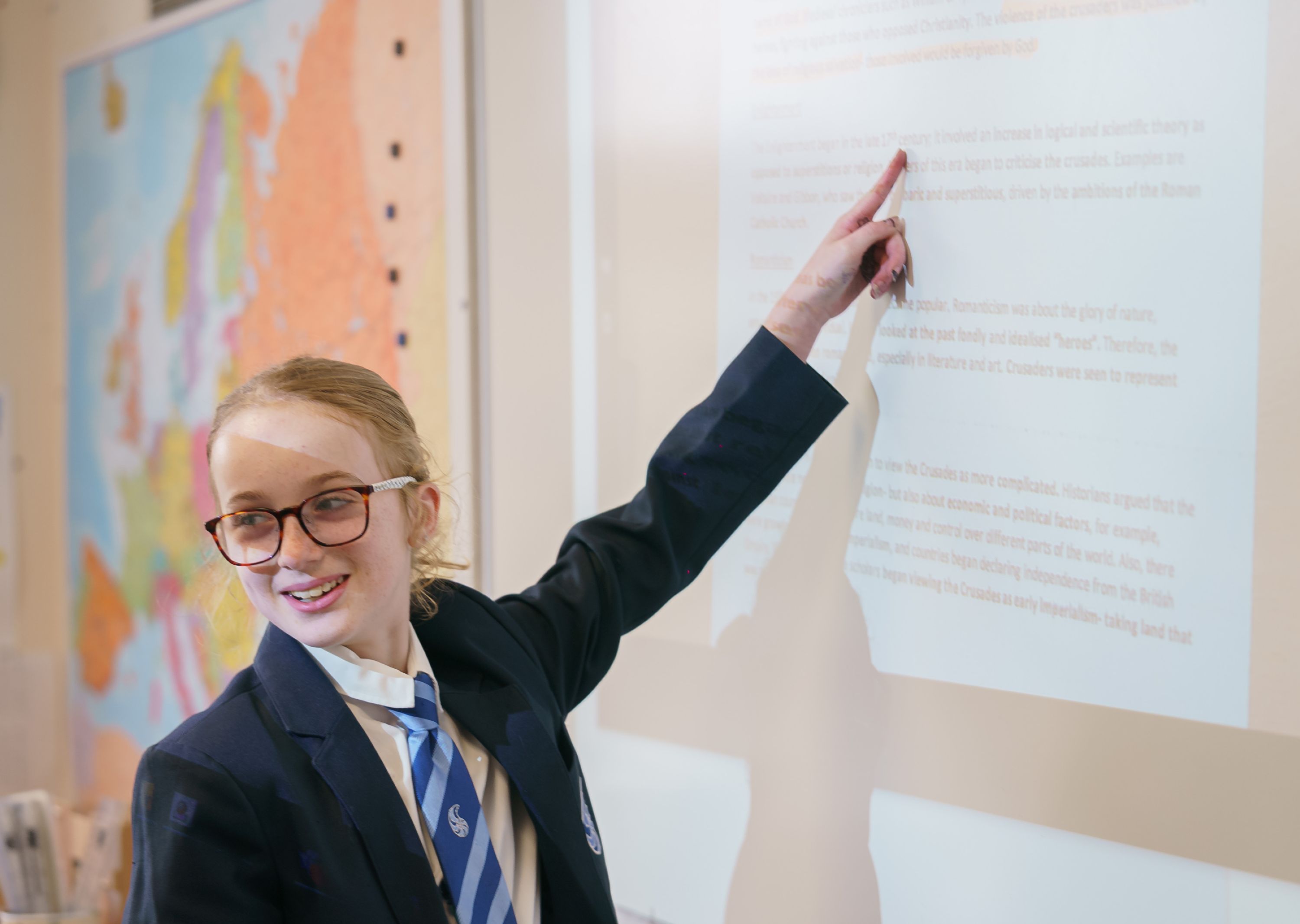
History at The Purbeck School is an ambitious pursuit to understand the world around us. In our History lessons, students do not simply learn about the past; they encounter inspirational individuals, complex societies, and momentous events. Our ambitious curriculum spans from pre-history and early Britons to the information age and the rise of China. At the heart of our History curriculum is the belief that human beings, as individuals, have the power to shape their future; whether in the dusty annals of Salisbury Cathedral or recently de-classified documents released by the United States government, students encounter evidence of how people, just like them, have changed the world. Ultimately, the pursuit of History at The Purbeck School will challenge students not just to learn about the past, but to understand how they themselves are made by History.
Key Stage 3 fires up students’ curiosity and imagination, moving and inspiring them to ask and answer questions of the present by engaging with the past. Students study the history of Britain in depth, to understand how our unique society has developed, and its relationships with the wider world. Students also study past civilisations and societies in both Europe and the wider world. A key aspect of learning is making wider links and connections through exciting cross-curricular projects coordinated within the Humanities Faculty. A growing range of day trips and field visits help students to learn beyond the classroom.
GCSE History is a very popular option choice. The course engages students to gain depth and breadth of understanding about issues and events, both locally and globally.
The topics studied include:
- The Elizabethan Age 1558-1603
- The rise and impact of Nazism in Germany 1919-39
- The development of the USA 1929-2000
- Changes in Health and Medicine c500-the present day
A level History presents students with a challenging range of units, providing students with a genuine depth of knowledge about global societies which forged the modern world. In Year 12, students study contrasting communist states in Russia and China to learn about the impacts of individuals and ideology on the world, including a depth study on the collapse of the Soviet Union and the liberal revolutions in eastern Europe. In Year 13, students are challenged to consider Britain’s role in the making of the modern world by writing an extended research essay on the consequences of colonialism in the Middle East and, simultaneously, developing a deep knowledge of how the Tudor dynasty created England’s first centralised state amongst the fire and fury of rebellion and Reformation.
- Unit 1 – Russia, 1917-91: from Lenin to Yeltsin
- Unit 2 – Mao’s China, 1949-76
- Unit 3 – Rebellion and Disorder under the Tudors 1485-1603
- Unit 4 – Coursework: ‘Historians have disagreed over the extent to which Israel was formed over Zionism’ How far do you agree?
Rationale for our curriculum:
-
Our History curriculum teaches students to think like historians by critically investigating the people, events and ideas that have shaped Britain and the wider world. Through a diverse and ambitious study of human experience, students develop powerful knowledge, historical enquiry skills and the confidence to participate as informed and responsible citizens. By engaging with questions of power, belief, conflict, democracy and identity, students become informed, reflective and active citizens who can think critically of the world around them.
Key concepts:
The concepts that The Purbeck School History curriculum aims to support student progression in are:
- AO1 Knowledge and Understanding
- AO2 Explanation and Analysis
- AO3 Analysing Sources
- AO4 Interpretations
Useful Links:
- Key Stage 3 National Curriculum: https://assets.publishing.service.gov.uk/government/uploads/system/uploads/attachment_data/file/239075/SECONDARY_national_curriculum_-_History.pdf
- GCSE specification: http://www.eduqas.co.uk/qualifications/history/
- A Level specification: https://qualifications.pearson.com/content/dam/pdf/A%20Level/History/2015/Specification%20and%20sample%20assessments/9781446914366_GCE_2015_A_HIST.pdf