












Health & Social Care

Why Study Health and Social Care at The Purbeck School?
Subject rationale:
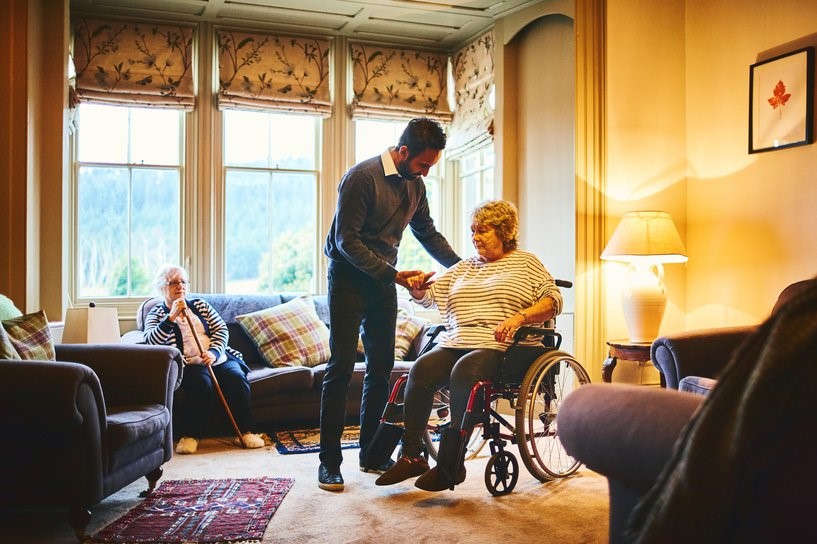 Health and social care equips students to discover the impact of positive and negative human development and to critically analyse how these factors affect our day-to-day lives. Health and social care enables students to explore areas that influence how we develop throughout life stages and in turn raise expectations of how we can live successful and healthy lives now and in our future.
Students learn about different health conditions which can affect individuals and they will be encouraged to develop health plans to improve health and well-being along with overcoming any barriers. Understanding of the different values of care within health and social care are developed to enable students to learn how to work within any health or social environment, and why each one is important.
Students will be encouraged to do further research into the different settings and roles within those settings relating them to various health conditions. Health and social care promotes opportunities for students to draw from case studies and opportunities to undertake research to complement learning and create skills that will be used throughout their lives. These skills encourage students to think outside typical teenage egocentrism and begin to challenge the way they perceive the world we live in. Furthermore, highlighting how human relationships, physical environment and socio-economic status may influence how they develop.
Developing our learners:
We believe that students deserve a curriculum that prepares them for career pathways in a variety of vocational areas, providing them with the knowledge and skills within health and social care that can then be transferred to a variety of environments. Our curriculum ensures that all of our students will have the opportunity to:
- Develop key skills that prove aptitude in health and social care such as interpreting data to assess an individual’s health
- Process effective ways of working in health and social care such as designing a plan to improve an individual’s health or well-being
- Develop attitudes that are considered most important in health and social care, including the values of care that are vitally important in the sector, and the opportunity to practice the application of these
- Gain knowledge that underpins effective use of skills, process and attitudes in the sector such as human growth and development, health and social care services and factors affecting people’s health and well-being as well as developing an understanding of essential legislation designed to protect service users
- Development of core knowledge and understanding of the human body, how people deal with major life events, health and social care services
- Development and application of skills such as practical demonstration of values of care together with the ability to reflect on own performance
Marking and targeted feedback is given to support student improvement, to inspire challenge through questioning and to build resilience to encourage students to learn from their mistakes and use these as a platform for improvement.
Structure & Sequence: Key Stage 4:
This is a demanding course that requires learners to undertake external examination in 1 unit and complete 2 large project-based tasks. There is an element of science within the course and a good understanding of English is essential as the subject covers legislative acts and some complex terminology. Learners should be prepared to write and use technology equally in lessons to present their research and knowledge.
Learners joining the course in Year 10 will study the new OCR Nationals Level 1/2 in Health and Social Care, which is equivalent to 1 GCSE. This course is aimed at students aged 14 – 16 years and will develop knowledge, understanding and practical skills that would be used in the health and social care sector. Students may be interested in this course if they want to use what they learn in practical, real-life situations such as recommending support for individuals, creating and delivering activities and creating and delivering health promotion campaigns. Communication is at the heart of health and social care and is taught or applied in all units. Researching topic areas and recording research sources, then using them to interpret findings and present evidence. Creating, presenting/delivering information to a group or an individual through health promotion campaigns will involve time management and identification of aims and resources and methods.
This course is composed of 3 units:
RO32: Principles of care in health and social care settings. This unit is assessed by examination in year 11. In this unit students learn about key topics that are important when caring for and protecting people in health and social care. Topics include: the rights of service users in health and social care settings, person centred values, effective communication in health and social care settings, protecting service users and service providers in health and social care settings.
RO33: Supporting individuals through life events. This unit is assessed in Year 10 by a set assignment which is released annually and valid for one year. In this unit students learn about growth and development through the life stages. They also learn how to understand the needs of individuals who have been affected by life events and how to recommend support to meet their needs. Topics include: life stages, impacts of life events, sources of support.
RO35: health promotion campaigns. This unit is assessed by a set assignment in Year 10 which is released annually and valid for one year. In this unit students will research health promotion campaigns and learn about the benefits to society. They will also plan and deliver their own health promotion campaign. Topics include: current public health issues and the impact on society, factors influencing health, plan and create a health promotion campaign, deliver and evaluate health promotion campaigns.
To work in a health or social care setting it is essential to understand the rights of individuals, person centred values and how they can be applied. This qualification helps students to develop the knowledge and to understand the importance of effective communication skills when working in these settings. The skills students learn will help them to progress on to further study in the health and social care sector either through level 3 vocational qualifications such as the Cambridge Technicals at key stage 5 or through A-levels in psychology, biology or sociology and through the following apprenticeships: adult healthcare worker, allied health professional support, health and social care, healthcare science assistant, maternity and paediatric support.
Structure & Sequence: Key Stage 5:
To work in a health or social care setting, it is essential to understand the rights of individuals, person-centred values and how they can be applied. This qualification helps students to develop knowledge and to understand the importance of effective communication skills when working in these settings. The skills students learn will help them to progress on to further study in the health and social care sector either through level 3 vocational qualifications such as the OCR AAQ in heath and social care at key stage 5 or through A-levels in psychology, biology or sociology and through the following apprenticeships: adult healthcare worker, allied health professional support, health and social care, healthcare science assistant, maternity and paediatric support.
Key Stage 5
This is a demanding course that requires learners to undertake a number of external examinations alongside project-based tasks, there is a high workload with deadlines that must be met. There is a large 90 guided learning hour unit based around anatomy and physiology of the human body, due to this the entry requirements for the course means that we do look at student’s prior achievement in science. A grade 4 in maths and English is also desirable. Currently at key stage 5, students’ study for an AAQ in health and social care with OCR, Student’s study for the extended certificate qualification which is the equivalent of 1 A-level.
Year 12
F180 Principles of health and social care: everyone is different and everyone has rights. Respecting diversity and rights in health, social care and child care environments is essential in today’s very diverse society. Whatever role you have, or aspire to, in health, social care or childcare, an effective practitioner must be able to provide care that meets the needs of individuals that support their rights. Many individuals who use health, social care or childcare environments can be vulnerable and dependent on others; this means that practitioners' attitudes, values and prejudices can significantly affect the quality of care that individuals who require care or support experience. This unit will help you to understand the implications of diversity on practice and also the effects of discriminatory practice on individuals who require care or support. You will also gain an appreciation of how legislation and national initiatives support and promote anti-discriminatory practice. Strategies used to promote equality, respect diversity and support individuals’ rights will be examined. You will develop your ability to recognise both good and discriminatory practice in care situations. You will develop your judgement and decision-making skills to choose appropriate responses in care situations and determine the course of action to promote the equality, diversity and rights of individuals in care settings. This unit is externally assessed by an exam.
F090 Person centred approach to care: no work in health and social care sectors is completed in isolation. Professional relationships are paramount to the delivery of safe and effective care. Support and understanding of these relationships, and how they are formed, is essential if you are considering pursuing a career in the health and social care sector. In this unit you will learn the principles and values that underpin a person-centred approach to care and the practical tools that can be used to develop care plans for individuals. You will explore how to communicate in health and social care, how to build relationships and the barriers that need to be overcome to achieve person-centred care. You will learn to write outline care plans to suit individuals, using person-centred approaches and develop your reflective practice skills. This unit is internally assessed and externally moderated by OCR.
F093 Supporting people with mental health conditions: In this unit you will learn about how individuals with mental health conditions can be cared for and supported in a way which is suitable for their needs. You will do this through exploring the meaning of mental health and mental health needs, and considering the main types of mental health conditions and how these may affect the life of individuals. You will explore the different ways that individuals may be supported to promote their mental wellbeing, manage their condition, and different forms of treatment and support that may be available. This unit is internally assessed and externally moderated by OCR.
Year 13
F091 Anatomy and physiology for health and social care: we eat, we breathe and we control our bodies, as well as responding to the external environment. In this unit you will learn about the arrangement of body systems and the structure and function of the component parts. You will learn about key processes within each body system, that enable them to function properly. You will then explore conditions affecting these systems, specifically learning about the biological basis, monitoring, treatment and impact on lifestyle and independence. This unit is externally assessed by an exam.
F096 Supporting people in relation to sexual health, pregnancy and post-natal health: In this unit you will learn about and research the most important aspects of sexual health including relationships, the law, consent, sexual health, sexually transmitted infections, contraception, pre-conceptual care, birth, and the immediate care of the baby, and how to obtain support for these. You will also learn to produce advice and guidance that is personalised for specific individuals with issues related to sexual health and pregnancy, birth and postnatal health. You will develop skills needed to deliver advice and guidance in a sensitive and professional way and review the process of doing this. This unit is internally assessed and externally moderated by OCR
F097 Supporting healthy nutrition and lifestyles: In this unit you will learn about the healthy eating guidelines, physical activity guidelines, nutritional labelling and the sources of nutrients. You will learn how to use this information to plan healthy and balanced meals for service users with different nutritional needs. You will investigate some of the barriers facing service users to eat healthy meals and the support that individuals may require to eat healthy meals. This unit is internally assessed and externally moderated by OCR
Destinations: What Success can students look forward to?
Students who study health and social care will develop their ability/aptitude to demonstrate tolerance, respect, dignity, effective communication skills and application of anti-discriminatory practice. This subject provides pathways into a wide variety of career options including nursing, teaching and education, social care and social work, counselling, working in early years’ sectors and will provide access to numerous apprenticeships and study options within the NHS.
Within health and social care, we aim to develop caring and compassionate individuals who will develop a passion and desire to work within this expanding industry. Health and social care is a large and growing sector within the British economy with approximately 3 million people employed within the sector. This is equivalent to 1 in every 10 people and therefore its currency as a subject to be delivered to pupils at key stage 4 and Key stage 5 is high. Due to our ageing and growing population, demand for services within the sector of the economy is going to continue to rise, with health and social care services playing a key role in today’s society. Students who have studied health and social care at key stage 5 have gone on to further education courses such as: biomedical sciences, nursing and midwifery, social work, psychology and early years’ education.
Key concepts: Year 10/11
| R032 Principles of care in H&SC settings |
The rights of service users in H&SC settings Person-centred values Effective communication in H&SC settings Protecting service users and service providers |
| R033 Supporting individuals through life events |
Life stages Impacts of life events Sources of support |
| R035 Health promotion campaigns |
Current public health issues and the impact on society Factors influencing health and well-being Plan and create a health promotion campaign Deliver and evaluate your campaign |
Key Concepts: Year 12/13
|
F090 |
Principles of Health & Social Care 90min EXAM (Mandatory Unit)
|
|
F092 |
Person-Centred Approach to Care COURSEWORK (Mandatory Unit)
|
|
F093 |
Supporting People with Mental Health Conditions COURSEWORK (Mandatory Unit)
|
|
F091 |
Anatomy & Physiology 90min EXAM (Mandatory Unit)
|
|
F096 |
Sexual health, pregnancy & postnatal health COURSEWORK (Optional Unit)
|
|
F097 |
Supporting Healthy Nutrition and Lifestyle COURSEWORK (Optional Unit)
|